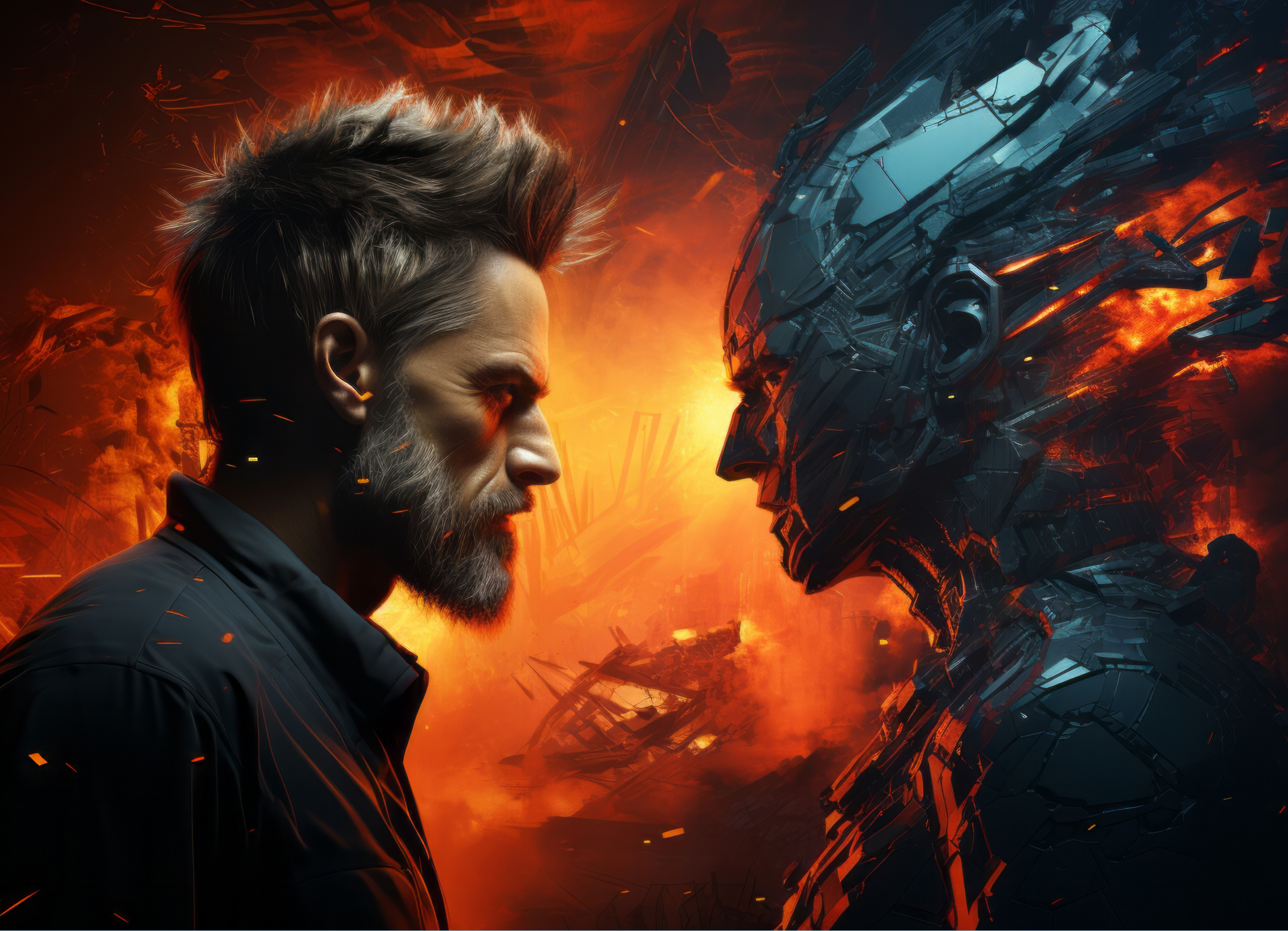
Blockchain and eSports – a Beneficial Combination
Blockchain and eSports a Beneficial Combination

The gaming industry has received much appraisal for being one of the most constant industries when it comes to growth. The progress that has been made over the years transcends financial capacities to include the ability to unite people globally, as well as open up opportunities for innovation and creation of jobs. Among one of the fastest fronts of gaming and sports, today is the eSports sector. Having originated in the 80’s, eSports has been adopted worldwide and currently has an estimated 208 million viewership worldwide. These figures, according to IP Watchdog, is expected to grow to about 330 million by next year and 500 million by 2021.

Growth Factors

One of the main factors which have facilitated the constant and rapid growth of the gaming industry is the ability to adapt to new technologies quickly and effectively. This is in part due to the fact that the population consisting of the industry is majorly a young, tech-savvy one and those who are not scared to experiment with new technologies. The emergence of streaming services a little under a decade ago has also been pivotal in the expansion of eSports. These services have allowed sports organizers and gaming facilitators to expand their reach and gain a wider customer base which is continually growing.

Problem Areas

Even with all the success, the gaming industry faces some challenges in their efforts to streamline services. Business models, for instance, have been inconsistent, resulting in delay or failure to pay players. The infrastructures in place also lack clear-cut means for supporters and enthusiasts to be involved, leading to a monopolistic system where game owners have a higher control over players and international regulations.

BLOCKCHAIN AS A SOLUTION

The blockchain is a technology that has helped to jump many hurdles in technology so far, most notably the finance sector as well as in the management of documents. Innovators are now looking to do the same in eSports. By applying Blockchain, power and opportunities will be equally distributed among various groups involved in eSports. Various processes which have not been handled properly in the past – such as advertisement and sponsorship – will be streamlined and better monitored. The advantages that can be realized through the application of Blockchain include but are not limited to the following.

Smart Contraction

Blockchain offers the participants of eSports a platform for the generation of concise contracts which caters to the interests of all parties involved. Through Blockchain, players and teams involved will acquire a more transparent view of their deals, enabling them to identify areas of conflict and resolve them. They will also monitor these contracts better to ensure that game owners hold their end of these deals. eSports teams will also gain from smart contractions. Activities such as agreements dealing with payments, transfer of team members and the creation of tournaments will be streamlined and better managed.

Better eSports Finance Systems

The management of funds within eSports platforms is still considerably erratic and unstructured. A lot of funding goes unmonitored and most of the parties involved fail to acquire proper remittance for their services and participation in these gaming tournaments. Blockchain seeks to change the scene through cryptocurrency and the use of its distributed ledger technology to log transfer of funds in a transparent way. The technology will allow funds provided to game owners in form of donations, sponsorships, and investments to be better monitored and properly distributed across various departments within the business. Payments for players and teams will also be governed accordingly, with transactions having proper records.

Betting is also big in the eSports sector and Blockchain can be instrumental in running the processes fairly. It will enable low-fee betting and open up the avenue for participants at the grassroots. Match-fixing will also be discouraged, as Blockchain will strengthen the anonymity of betting selections, thereby preventing fraudulent use of the information to arrange wins.

Another financial benefit for eSports participants in finance is the secure and reliable transfer of funds when it comes to exchanging hard-earned rewards that are acquired during gameplay. Most games today feature hidden gems which are considered valuable for players, to the extent of bidding for them in order to progress further in the game or to improve player stats. Blockchain will prevent players from falling prey to fake payments or reversal of transactions as it entails an untraceable feature of funds transferred while logging in details which can be useful in investigations.

Strengthening IP Rights

IP rights in eSports can range from the game itself to the activities carried out during gameplay. Players have been known to come up with moves or even develop features within a game which improve the gameplay and enhance experiences. However, these players normally fail to get the recognition due to the fact that games belong to someone else. Blockchain technology can assist such inventions to be recognized, more specifically through those who have created them. Players can seek to copyright their inventions and earn some form of payments from them. Open source games will also have better management and allow for licensing of various modules which have been developed within the game environments.

Even though Blockchain technology in the eSports arena is still underdeveloped, there are many areas of application which can potentially benefit from its proper implementation. Knowing the different facets involved in eSports will enable developers to generate software solutions which seek to solve real problems and enable a more democratic space for these systems to thrive.

Latest Articles

Digital Twins for Digital Transformation Strategy in the Industrial Sector
April 22, 2026
Digital Twins for Industry 5.0 Transformation Strategy

Industrial digital transformation is no longer just about automation or collecting data. More and more, it comes down to having a live, accurate digital representation of what is actually happening across physical operations. That is what a digital twin does: it creates a virtual model of a machine, a production line, or an entire facility, and keeps it synchronized with real-world data in real time. This makes it more than a visualization tool. It becomes a working instrument for a variety of industrial applications: simulations, predictive maintenance, monitoring and analytics, process and operational optimization, quality control, worker enablement, EHS solutions, and faster decision-making. Industrial Extended Reality (XR) and immersive technologies are entering their second wave of adoption. While the first wave was shaped mainly by experimentation with XR, the current stage is enabled by mature hardware and significantly stronger digital capabilities, allowing organizations to realize the true value of VR and AR in practical, scalable ways. In parallel, digital transformation is shifting from the automation-led, low-human-involvement logic of Industry 4.0 toward a human-centric model built on human-machine collaboration and co-piloting in Industry 5.0. Industry is adopting Extended Reality (XR) faster than any other sector. Manufacturing and industrial operations accounted for 35.1% of the global digital twin market in 2025. More than half of companies using digital twins report profitability increases of over 20%, and Gartner predicts that by 2027, 40% of large industrial companies will use the technology, resulting in increased revenue. The market overall is projected to grow from $49.2 billion in 2026 to $228.46 billion by 2031. These numbers show that digital twins become a core part of how industrial companies compete and operate. In this article, we look at the specific areas where digital twins create the most value in the industrial sector today, walk through real-world cases from companies already using them at scale, and discuss where the technology is headed next. Why Digital Twins are more than virtual models The role of digital twins has broadened significantly, now covering simulation, planning, operations, and essential 3D visualization needs. As a strategic capability, the digital twin helps organizations understand the present state of assets and systems, anticipate what comes next, and make more precise, informed decisions. This is what separates them from the technologies they are often confused with. A 3D model is static and disconnected from physical reality. A simulation runs defined scenarios but doesn’t update as circumstances change. BIM captures asset properties at a point in time—valuable, but not dynamic. A digital twin does all three, continuously. Let’s look at how this works from a technological perspective. The technology stack behind the intelligence Within the virtual model, three interconnected layers work together.  The first is the data storage and processing layer, responsible for ingesting, organizing, and structuring incoming data streams. IoT sensors and edge devices form the foundation of data acquisition, continuously capturing physical parameters: temperature, vibration, pressure, energy consumption, throughput. This data moves through real-time pipelines into processing environments. The second is the analytics and AI layer, which interprets this data by detecting anomalies, identifying patterns, generating forecasts, and providing recommendations to guide operational decisions.  The third is the visualization and interface layer, translating these insights into clear, actionable formats: dashboards, alerts, or interactive simulations, that engineers, operators, and executives can easily use. A digital twin also integrates with the broader enterprise ecosystem, including engineering documentation, GIS platforms, maintenance systems, financial tools, and business networks. The result is a closed loop of intelligence. Physical reality continuously updates the virtual mode → the model generates insights → and those insights guide decisions that impact the physical system. Types of digital twins Depending on the level of detail and the specific operational goals, a digital twin can focus on a single component, a complete asset, an entire system, or even a full process. Recognizing these distinctions helps organizations select the right model for each use case. A component twin represents a single element (a pump, a bearing, a sensor) and is primarily used for granular condition monitoring and early failure detection.  An asset twin integrates multiple components into a unified model of a complete physical asset, such as a machine or a turbine, enabling a more comprehensive view of performance and interdependencies.  A system twin extends this further, representing how multiple assets interact within a broader operational environment (a production line, a power grid, or a supply chain node).  A process twin models entire workflows and decision sequences, making it possible to trace how disruptions, inefficiencies, or interventions propagate across an organization. In real-world deployments, these levels are layered: component twins feed into asset twins, which feed into system and process twins. This nested setup mirrors actual operational complexity and enables insights at any level, from individual parts to entire workflows. Where digital twins create the most industrial value Below, we break down the use cases where digital twins are generating the most value in the industrial sector today. Predictive maintenance and asset reliability Unplanned equipment downtime remains one of the most costly scenarios for any industrial enterprise. When a critical asset fails unexpectedly, the company loses not only on repairs but also on production chain disruptions, logistical failures, and reputational risks. This is why predictive maintenance powered by digital twins has become one of the most mature and economically justified applications of the technology. The traditional approach to maintenance operates on two models: reactive (repair after failure) or scheduled preventive (servicing on a fixed schedule, regardless of the actual condition of the equipment). Both models are inefficient. The first leads to emergency shutdowns, while the second results in excessive spending on servicing components that still have significant remaining life. The digital twin changes this paradigm. It creates a virtual copy of a physical asset that continuously receives sensor data and updates in real time. Through machine learning algorithms, the system analyzes wear patterns, compares current conditions against historical data, and predicts the moment when a component will reach a critical state. This enables maintenance to…

October 4, 2024
Meta Connect 2024: Major Innovations in AR, VR, and AI

Meta Connect 2024 explored new horizons in the domains of augmented reality, virtual reality, and artificial intelligence. From affordable mixed reality headsets to next-generation AI-integrated devices, let’s take a look at the salient features of the event and what they entail for the future of immersive technologies. Meta CEO Mark Zuckerberg speaks at Meta Connect, Meta’s annual event on its latest software and hardware, in Menlo Park, California, on Sept. 25, 2024. David Paul Morris / Bloomberg / Contributor / Getty Images Orion AR Glasses At the metaverse where people and objects interact, Meta showcased a concept of Orion AR Glasses that allows users to view holographic video content. The focus was on hand-gesture control, offering a seamless, hands-free experience for interacting with digital content. The wearable augmented reality market estimates looked like a massive increase in sales and the buyouts of the market as analysts believed are rear-to-market figures standing at 114.5 billion US dollars in the year 2030. The Orion glasses are Meta’s courageous and aggressive tilt towards this booming market segment. Applications can extend to hands-free navigation, virtual conferences, gaming, training sessions, and more. Quest 3S Headset Meta’s Quest 3S is priced affordably at $299 for the 128 GB model, making it one of the most accessible mixed reality headsets available. This particular headset offers the possibility of both virtual immersion (via VR headsets) and active augmented interaction (via AR headsets). Meta hopes to incorporate a variety of other applications in the Quest 3S to enhance the overall experience. Display: It employs the most modern and advanced pancake lenses which deliver sharper pictures and vibrant colors and virtually eliminate the ‘screen-door effect’ witnessed in previous VR devices. Processor: Qualcomm’s Snapdragon XR2 Gen 2 chip cuts short the loading time, thus incorporating smoother graphics and better performance. Resolution: Improvement of more than 50 pixels is observed in most of the devices compared to older iterations on the market, making them better cater to the customers’ needs Hand-Tracking: Eliminating the need for software, such as controllers mandatory for interaction with the virtual world, with the advanced hand-tracking mechanisms being introduced. Mixed Reality: A smooth transition between AR and VR fluidly makes them applicable in diverse fields like training and education, health issues, games, and many others. With a projected $13 billion global market for AR/VR devices by 2025, Meta is positioning the Quest 3S as a leader in accessible mixed reality. Meta AI Updates Meta Incorporated released new AI-assisted features, such as the ability to talk to John Cena through a celebrity avatar. These avatars provide a great degree of individuality and entertainment in the digital environment. Furthermore, one can benefit from live translation functions that help enhance multilingual art communication and promote cultural and social interaction. The introduction of AI-powered avatars and the use of AI tools for translation promotes the more engaging experiences with great application potential for international business communication, social networks, and games. Approximately, 85% of customer sales interactions will be run through AI and its related technologies. By 2030, these tools may have become one of the main forms of digital communication. AI Image Generation for Facebook and Instagram Meta has also revealed new capabilities of its AI tools, which allow users to create and post images right in Facebook and Instagram. The feature helps followers or users in this case to create simple tailored images quickly and therefore contributes to the users’ social media marketing. These AI widgets align with Meta’s plans to increase user interaction on the company’s platforms. Social media engagement holds 65% of the market of visual content marketers, stating that visual content increases engagement. These tools enable the audience to easily generate high-quality sharable visual images without any design background. AI for Instagram Reels: Auto-Dubbing and Lip-Syncing Advancing Meta’s well-known Artificial Intelligence capabilities, Instagram Reels will, in the near future, come equipped with automatic dubbing and lip-syncing features powered by the artificial intelligence. This new feature is likely to ease the work of content creators, especially those looking to elevate their video storytelling with less time dedicated to editing. The feature is not limited to countries with populations of over two billion Instagram users. Instead, this refers to Instagram’s own large user base, which exceeds two billion monthly active users globally. This AI-powered feature will streamline content creation and boost the volume and quality of user-generated content. Ray-Ban Smart Glasses The company also shared the news about the extensions of the undoubted and brightest technology of the — its Ray-Ban Smart Glasses which will become commercially available in late 2024. Enhanced artificial intelligence capabilities will include the glasses with hands-free audio and the ability to provide real-time translation. The company’s vision was making Ray-Ban spectacles more user friendly to help those who wear them with complicated tasks, such as language translation, through the use of artificial intelligence. At Meta Connect 2024, again, the company declared their aim to bring immersive technology to the masses by offering low-priced equipment and advanced AI capabilities. Meta is confident to lead the new era of AR, VR, and AI innovations in products such as the Quest 3S, AI-enhanced Instagram features, and improved Ray-Ban smart glasses. With these processes integrated into our digital lives, users will discover new ways to interact, create, and communicate within virtual worlds.

September 2, 2024
How to Use Artificial Intelligence in Creating Content for RPG Games

Introduction The World of Artificial Intelligence (AI) and Its Application in Content Creation for RPG Games Recently, the world of IT technology has been actively filled with various iterations of artificial intelligence. From advanced chatbots that provide technical support to complex algorithms aiding doctors in disease diagnosis, AI’s presence is increasingly felt. In a few years, it might be hard to imagine our daily activities without artificial intelligence, especially in the IT sector. Let’s focus on generative artificial intelligence, such as TensorFlow, PyTorch, and others, which have long held an important place in software development. However, special attention should be given to the application of AI in the video game industry. We see AI being used from voice generation to real-time responses. Admittedly, this area is not yet so developed as to be widely implemented in commercially available games. But the main emphasis I want to make is on the creation and enhancement of game content using AI. In my opinion, this is the most promising and useful direction for game developers. The Lack of Resources in Creating Large and Ambitious RPG Games and How AI Can Be a Solution In the world of indie game development, a field with which I am closely familiar, the scarcity of resources, especially time and money, is always a foremost challenge. While artificial intelligence (AI) cannot yet generate money or add extra hours to the day (heh-heh), it can be the key to effectively addressing some of these issues. Realism here is crucial. We understand that AI cannot write an engaging story or develop unique gameplay mechanics – these aspects remain the domain of humans (yes, game designers and other creators can breathe easy for now). However, where AI can truly excel is in generating various items, enhancing ideas, writing coherent texts, correcting errors, and similar tasks. With such capabilities, AI can significantly boost the productivity of each member of an indie team, freeing up time for more creative and unique tasks, from content generation to quest structuring. What is Artificial Intelligence and How Can it be Used in Game Development For effective use of AI in game development, a deep understanding of its working principles is essential. Artificial intelligence is primarily based on complex mathematical models and algorithms that enable machines to learn, analyze data, and make decisions based on this data. This could be machine learning, where algorithms learn from data over time becoming more accurate and efficient, or deep learning, which uses neural networks to mimic the human brain. Let’s examine the main types of AI Narrative AI (OpenAI ChatGPT, Google BERT): Capable of generating stories, dialogues, and scripts. Suitable for creating the foundations of the game world and dialogues. Analytical AI (IBM Watson, Palantir Technologies): Focuses on data collection and analysis. Used for optimizing game processes and balance. Creative AI (Adobe Photoshop’s Neural Filters, Runway ML): Able to create visual content such as textures, character models, and environments. Generative AI (OpenAI DALL-E, GPT-3 and GPT-4 from OpenAI): Ideal for generating unique names, item descriptions, quest variability, and other content. By understanding the strengths and weaknesses of each type of AI, developers can use them more effectively in their work. For example, using AI to generate original stories or quests can be challenging, but using it for correcting grammatical errors or generating unique names and item descriptions is more realistic and beneficial. This allows content creators to focus on more creative aspects of development, optimizing their time and resources. An Overview of the Characteristics of Large Fantasy RPG Games and Their Content Requirements In large fantasy RPG games, not only gameplay and concept play a pivotal role, but also the richness and variability of content – spells, quests, items, etc. This diversity encourages players to immerse themselves in the game world, sometimes spending hundreds of hours exploring every nook and cranny. The quantity of this content is important, but so is its quality. Imagine, we offer the player a relic named “Great Heart” with over 100 attribute variations – that’s one approach. But if we offer 100 different relics, each with a unique name and 3-4 variations in description, the player’s experience is significantly different. In AAA projects, the quality of content is usually high, with hundreds of thousands of hours invested in creating items, stories, and worlds. However, in the indie sector, the situation is different: there’s a limited number of items, less variability – unless we talk about roguelikes, where world and item generation are used. A typical feature of roguelikes is the randomization of item attributes. However, they rarely offer unique generation of names or descriptions; if they do, it’s more about applying formulas and substitution rules, rather than AI. This opens new possibilities for the use of artificial intelligence – not just as a means of generating random attributes, but also in creating deep, unique stories, characters, and worlds, adding a new dimension to games. Integrating AI for Item Generation: How AI Can Assist in Creating Unique Items (Clothing, Weapons, Consumables). One of the practical examples of using AI is creating variations based on existing criteria. Why do I consider this the best way to utilize AI? Firstly, having written the story of your game world, we can set limits for the AI, providing clear input and output data. This ensures a 100% predictable outcome from AI. Let’s examine this more closely. When talking about the world’s story, I mean a few pages that describe the world, its nature, and rules. It could be fantasy, sci-fi, with examples of names, unique terminology, or characteristic features that help AI understand the mood and specifics of the world. Here is an excerpt from the text I wrote for my game world. The Kingdom of Arteria is an ancient and mysterious realm, shrouded in secrets and imbued with a powerful form of dark magic. For centuries, it has been ruled by Arteon the First, a wise and just monarch whose benevolence has brought peace and prosperity to his…


Let's discuss your ideas

Contact us